

When someone asks us what a dental implant costs, the first thing we want to do is give them a straight number. The problem is that “an implant” is really three or four things added together, and the total depends on your mouth. So this post does the next best thing: it explains what goes into the price, what tends to push it up or down, and how people in Clayton actually pay for it. By the end you should be able to read an estimate from any dentist and know what you’re looking at.
The short answer
Nationally, a single implant with its abutment and crown commonly runs between about $3,000 and $5,000. Your number depends on whether you need an extraction or bone graft first, where the tooth is, and the crown material. At Mooring Dental you get a written, itemized estimate after a 3D scan, before anything is scheduled.
What you’re actually paying for
A finished implant tooth has three parts, and each one is a separate line on most estimates.
- The implant itself. A small titanium post that’s placed in the jawbone and becomes the new root. This is the surgical part.
- The abutment. A connector that attaches to the post once it has healed and gives the crown something to hold onto.
- The crown. The visible tooth, custom made to match the ones next to it.
Around those three parts there is the planning work, which at our office means a 3D scan so Dr. Mooring can see exactly how much bone you have and where the nerves and sinuses sit before anything is placed. Then there are follow-up visits during healing. A good estimate lists all of this. If a price looks much lower than everyone else’s, check whether it’s for the post only.
What a single implant typically costs
Across the country, a single implant with its abutment and crown commonly lands somewhere between about $3,000 and $5,000. Replacing several teeth, or a full arch, is a different conversation with a much wider range. We don’t publish a flat price because we’d rather give you a real number for your situation than a generic one that changes once we see your scan. After your consultation and 3D imaging, you’ll leave with a written estimate before anything is scheduled.
What moves the price up or down
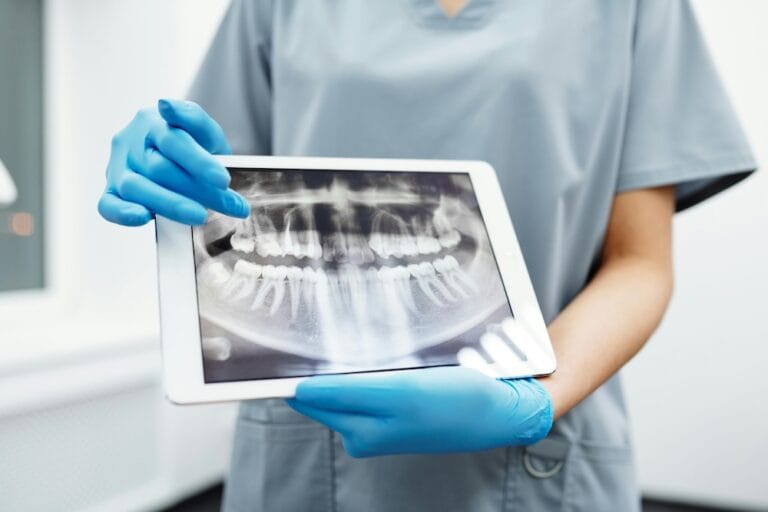
These are the things that explain why two neighbors with “one missing tooth” can get very different estimates.
- Whether the tooth is still there. If a failing tooth has to come out first, the extraction is its own step. Sometimes the implant can be placed the same day; sometimes the site needs to heal for a few months.
- How much bone you have. After a tooth has been gone for a while, the bone underneath shrinks. If there isn’t enough to hold an implant securely, a bone graft is needed first. This is the single most common reason an estimate comes in higher than someone expected, and it’s also why waiting years to replace a tooth tends to make it more expensive.
- Where the tooth is. Front teeth are the hardest to make look natural, and the crown work reflects that. Back teeth take more chewing force and sometimes call for different materials.
- How many teeth are missing. Two implants can support a three-tooth bridge, so you don’t always need one implant per tooth. For a full arch, a small number of implants can hold a complete set of teeth.
- The crown material. Porcelain, zirconia and hybrid materials have different costs and different strengths. We’ll tell you which one we’d use for your tooth and why.
Does dental insurance cover implants?
Sometimes, and partially. Many plans still class implants as elective, but a growing number cover a share of the crown, the extraction, or both, up to the plan’s annual maximum. That maximum is usually somewhere around $1,000 to $2,000, so even good coverage leaves a balance. We file claims on your behalf, including for plans where we’re out of network, and we’ll check your benefits before you commit so there are no surprises on the back end.
One practical tip: if your treatment will span two calendar years anyway (the implant in the fall, the crown in the spring, for example), you may be able to use two years of insurance maximums instead of one. Ask us about timing.
How Clayton patients actually pay for them
Most people don’t pay the whole amount on the day. The options we see used most are these.
- Monthly financing. We work with CareCredit and Wisetack, which let you spread the cost over a set number of months. Approval takes a few minutes, and promotional periods with no interest are often available.
- Our membership plan. If you don’t have dental insurance, the Mooring Dental Membership Plan covers your regular checkups and cleanings for a flat yearly fee and includes discounts on additional treatment. For many uninsured patients this ends up being the cheapest route.
- Health savings and flexible spending accounts. Implants are a qualified expense, so pre-tax dollars can be used.
- Staging the work. If you’re missing more than one tooth, we can often sequence treatment so the costs land in different months or years without compromising the result.
Want your actual number instead of a range?
Book an implant consultation. You’ll get a 3D scan, see your bone on the screen, and leave with a written estimate. No obligation to schedule.
Is an implant worth it compared to a bridge or a denture?
Up front, no. A dental bridge or a partial denture costs less on day one. Over 15 or 20 years the picture usually flips. Here’s the comparison we walk patients through.
| Implant | Bridge | Partial denture | |
|---|---|---|---|
| Upfront cost | Highest | Middle | Lowest |
| Typical lifespan | Decades with good care | 10 to 15 years, then replaced | 5 to 8 years, with relines |
| Neighboring teeth | Untouched | Two healthy teeth ground down for anchors | Clasps rest on neighbors |
| Jawbone | Preserved | Shrinks under the missing tooth | Shrinks, so the fit loosens |
| Feels like | Your own tooth | Fixed, close to natural | Removable appliance |
| Cost over 20 years | Usually lowest | Often two bridges | Several remakes |
A well-placed implant, kept clean, is meant to last for decades, and it’s the only option that keeps the bone in your jaw from shrinking. That’s why we call it the standard we compare everything else to. It’s still not the right answer for everyone, and we’ll tell you if a bridge or partial makes more sense for your mouth or your budget.
What happens at the consultation
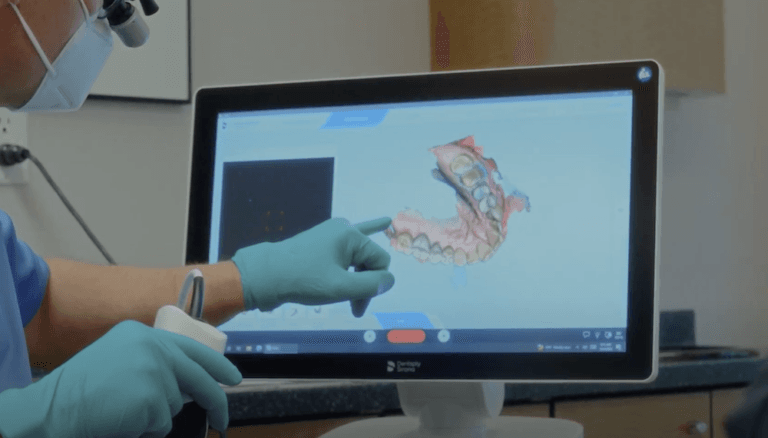
You’ll meet with Dr. Sean Mooring, we’ll take a 3D scan, and you’ll see on the screen what your bone looks like and where an implant would go. Then you get a written plan with the steps, the timeline, and the cost for each part, along with what your insurance is expected to contribute. There’s no obligation and no pressure to schedule that day. You can also read more about dental implants at Mooring Dental before you come in.
Questions patients ask about implant cost
How long does the whole implant process take?
For a straightforward single tooth, about three to six months from placement to finished crown, most of which is healing time while the implant bonds to the bone. If you need a bone graft or an extraction first, add a few months. We give you the full timeline in writing at the consultation.
Does getting a dental implant hurt?
The placement is done with local anesthetic, and most patients say it was easier than they expected. Expect some soreness for a few days afterward that over-the-counter pain relief handles well. If you are anxious about the procedure, tell us and we will talk through your options.
Am I too old for a dental implant?
There is no upper age limit. What matters is the health of your bone and gums and your overall health, which we check with a 3D scan and a review of your medical history. We place implants for patients well into their 70s and 80s.
Can I finance a dental implant at Mooring Dental?
Yes. We work with CareCredit and Wisetack, both of which offer monthly payment plans, and you can use HSA or FSA funds. If you do not have insurance, ask about our membership plan, which includes discounts on treatment.
I have been missing a tooth for years. Can I still get an implant?
Usually, yes. The bone under a missing tooth shrinks over time, so you may need a bone graft before the implant can be placed. The 3D scan at your consultation tells us exactly how much bone is there, and we will show you on the screen.

About Mooring Dental
We’re a family dental practice at 304 Tew Court in Clayton, NC, led by Dr. Sean Mooring, DDS with associate Dr. H.M. Zombek. The office is open from 7:00 a.m. Monday, Tuesday and Thursday and from 8:00 a.m. Wednesday, and we keep same-day time for emergencies.
Read patient reviews · New patient information · Specials and membership plan
Find out what your implant would actually cost
If you’ve been living with a missing tooth or a loose partial and you’d like a real number instead of a range, request a consultation. Scan, plan and written estimate in one visit.
Call 919-550-5611 Request an Appointment
Mooring Dental · 304 Tew Court, Clayton, NC 27520 · Mon, Tue, Thu 7:00 a.m. to 3:00 p.m. · Wed 8:00 a.m. to 4:00 p.m.